Automated Underwriting: Moving Beyond the 'Stare and Compare'
The Persistence of the Analog Mindset
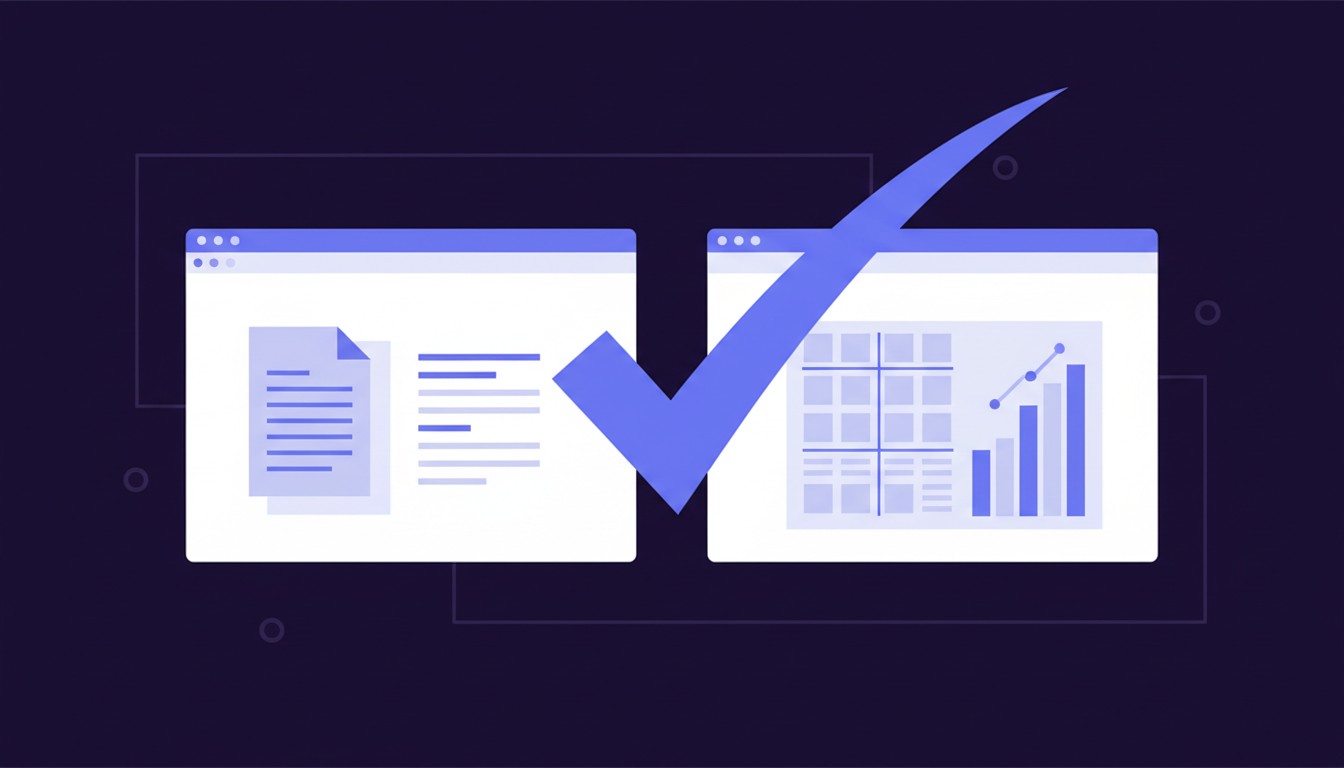
Walk into the underwriting department of almost any mortgage lender today and you’ll see the same thing: skilled professionals staring at two or three monitors, moving their eyes back and forth. On one screen is a paystub or bank statement. On the other is the 1003 within the LOS. The task? Confirming names match, income figures align, and deposits are documented.
This is the “stare and compare” method. Despite billions poured into “digital transformation,” it remains remarkably unchanged. For most of the industry, “digital” has merely meant “paperless”—we’ve traded physical filing cabinets for digital ones, but the manual verification work is the same.
In an era of AI-native infrastructure, this manual bottleneck is an operational tax lenders can no longer afford.
The Operational Tax of Manual Verification
Linear Scaling (The Headcount Trap)
In a manual world, there is a direct relationship between loan volume and headcount. Doubling output means doubling underwriting staff—making it impossible to scale efficiently during upswings and leading to painful layoffs during downswings.
The “Toggle Tax”
Underwriters toggle between the LOS, document viewer, pricing engines, and external portals. Research suggests context-switching can cost as much as 40% of productive time. In mortgage underwriting, this means longer cycle times and more mortgage tech debt.
Inconsistency Risk
Humans excel at complex decision-making but are notoriously bad at repetitive verification. Two underwriters looking at the same documents might reach different conclusions about qualifying income—creating compliance and buyback risk.
Why OCR Isn’t the Solution (and Why AI Is)
OCR tells you what characters are, but not what they mean. It might extract “$5,200” from a document, but can’t tell you if that’s monthly gross, net pay, or a one-time bonus—nor can it verify that $5,200 matches the application.
True automated underwriting requires three capabilities:
- Classification: Identifying exactly what the document is (W-2 vs. 1099-NEC).
- Extraction: Pulling relevant data points with high confidence.
- Cross-Referencing: Automatically checking extracted data against the system of record and flagging discrepancies.
When these three steps happen automatically, the underwriter shifts from “data verifier” to “decision maker.”
The Shift to Exception-Based Underwriting
An AI-native LOS performs the “stare and compare” work in the background, in real-time, as documents are uploaded. If data perfectly matches, the condition is marked “satisfied.” The underwriter is only alerted when there is an exception—a discrepancy requiring human judgment.
For example, if a bank statement shows a large undisclosed deposit, the system creates a targeted task: “Source Large Deposit.” No hunting through pages of transactions. This addresses many of the 10 manual tasks that slow down mortgage teams.
The ROI of Trusting the Machine
Reduced Cycle Times: When the “compare” part happens in seconds rather than hours, the entire manufacturing process accelerates.
Lower Cost per Loan: Breaking the linear link between volume and headcount significantly reduces operational costs.
Improved Loan Quality: Automation applies the same rigorous checks at 4:00 PM on Friday as at 9:00 AM on Monday. This consistency means fewer post-close corrections and reduced buyback risk. As we’ve seen with automated QC, catching errors early is far more cost-effective than fixing them post-close.
Conclusion
The most successful lenders use quieter periods to build infrastructure for the next boom. Relying on “stare and compare” is a strategy built for an era of cheaper labor and less complexity.
Building an AI-native foundation isn’t about replacing the underwriter—it’s about empowering them. Taking the “grind” out of the process so mortgage professionals can do what they do best: use their expertise to help families move into homes.
To understand how we’re rethinking the foundation of mortgage technology from the ground up, read The Story of Loancrate.