Scaling Without Headcount: The New Math of Mortgage Operations
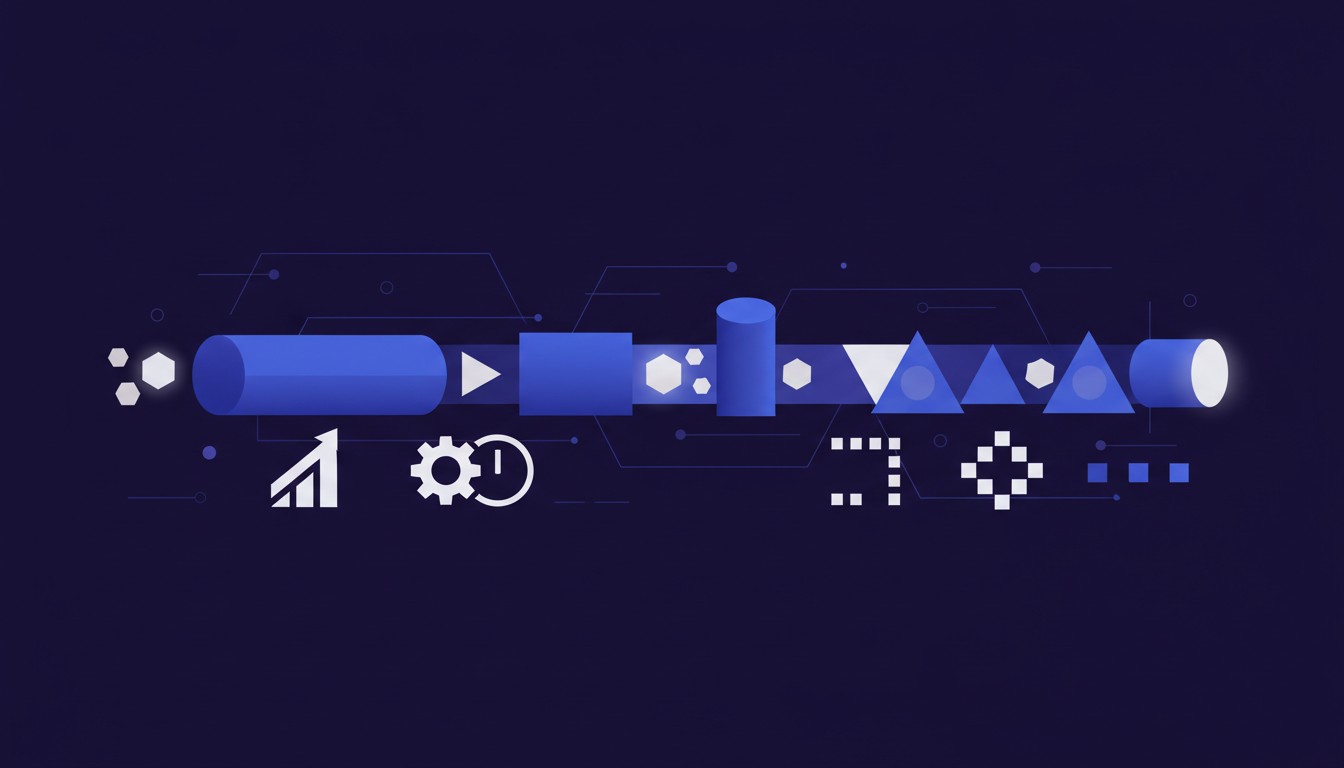
The Linear Trap
For decades, the mortgage industry has operated under a punishing law: to double your loan volume, you must nearly double your headcount.
This “Linear Trap” is why the industry remains one of the most volatile sectors of the economy. When rates drop, lenders scramble to hire with massive sign-on bonuses. When the market cools, they’re forced into painful layoffs. This cycle drains capital, institutional knowledge, and brand reputation.
The problem isn’t the people—it’s the infrastructure. Most lenders run on “digital filing cabinets” disguised as Loan Origination Systems. These systems store documents but don’t understand them, requiring human eyes for every verification.
At Loancrate, we believe it’s time to change the math. By moving to an AI-native foundation, lenders can decouple volume from headcount, achieving “Non-Linear Scalability.”
Why Legacy LOS Can’t Scale
Most legacy LOS platforms were built on relational databases designed for static forms. A “loan” is a collection of independent fields and PDFs with no intelligence linking a bank statement deposit to a loan program’s income requirements. Every new piece of information becomes a manual task.
An AI-native system uses a “knowledge graph” architecture. When a document enters the system, the AI automatically classifies it and maps entities to the loan’s data model. If a paystub shows a change in YTD earnings, the system recalculates DTI and checks investor guidelines instantly—shifting from passive record-keeper to active participant.
The “Manual Tax”
In a legacy environment, even a “perfect” loan file requires hours of manual labor. This is the stare and compare method—the human acts as the integration layer between different pieces of information.
This creates a “floor” for the cost to originate. If it takes 40 human hours to manufacture a loan at $8,000 in salary and benefits, your cost can never drop below $8,000, regardless of volume. When volume drops, that floor becomes a noose, forcing layoffs every cycle.
The Three Pillars of Non-Linear Scalability
1. Data-First Ingestion
Move from document-centric to data-centric ingestion. An AI-native system uses specialized models for AI-driven income calculation and asset verification. It doesn’t just “read” a W-2; it understands the relationships between year-to-date earnings, tax withholdings, and employer information, cross-referencing against the loan application in real-time.
2. Exception-Based Underwriting
In a traditional workflow, underwriters review every condition regardless of complexity. In an AI-native workflow, the system auto-clears “low-risk” conditions meeting guidelines. Underwriters are only alerted when the machine finds a discrepancy it can’t resolve—an unexplained employment gap or a complex corporate tax return. This allows a single underwriter to handle significantly higher volume without compromising quality. This is the core of ROI in better underwriting tools.
3. Continuous, Automated QC
Move Quality Control from the end of the process to the beginning. With automated QC, the system performs sanity checks at every step—checking for compliance violations, data inconsistencies, and missing documentation in real-time. By the time a loan reaches closing, it has already been checked hundreds of times, dramatically reducing the need for post-close QC teams.
The Business Case
Lowering the Operational Floor: With the machine handling repetitive work, baseline operational costs drop. In a high-rate environment, the lender with the lowest floor survives to see the next refi boom.
Raising the Capacity Ceiling: In a manual world, capacity is capped by human hours. In an AI-native world, your digital workforce scales instantly. If applications spike 50%, the machine works faster without a hiring spree.
This ability to handle volatility without massive headcount swings is the ultimate competitive advantage—allowing consistent turn times and a high-visibility pipeline even when the market is in chaos.
From “Originator” to “Orchestrator”
AI-native technology makes the human professional more valuable, not less. Consider a self-employed borrower with multiple LLCs and a recent divorce. A machine alone might struggle with those tax returns. But a human underwriter, freed from 10 manual tasks killing productivity on simpler files, can dedicate three hours to truly understanding that borrower’s picture.
The role shifts from “data entry clerk” to “loan orchestrator”—using deep industry knowledge to guide loans through a highly automated system. This leads to better outcomes and higher employee satisfaction. No one went to school to “stare and compare” paystubs for 10 hours a day.
Conclusion
Lenders who continue to rely on linear scaling will be squeezed by rising costs and shrinking margins. Building a surge-ready, non-linear operation requires rethinking the technology stack—moving away from “legacy LOS plus plug-ins” and embracing a platform built for the AI era.
At Loancrate, we built a system designed to break the linear trap and empower mortgage teams to scale without limits. The new math of mortgage operations is here.
To learn more about why we’re rebuilding the mortgage tech stack from the ground up, read The Story of Loancrate.